Anyone who’s been living in China for a while has probably heard of what’s known as the Gao Kao (?? – literally, “high exam”). It’s the rigorous week-long exam that Chinese high school students take before embarking on the first steps of adulthood. I was lucky enough to meet a recent high school graduate named Maomao who shared some information and photos about what taking the test is like.
What is the Gaokao?
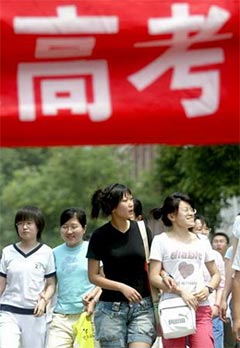 It’s similar to the SAT in in the U.S. in that it’s a higher entrance examination, but the sheer numbers of China make this a far more daunting test that determines much of your future. So I wasn’t hugely shocked when I recently heard that several students had met an untimely fate due to the tremendous pressure of the Gao Kao. In spite of knowing so little about what the Gao Kao is actually like, I found a great opportunity to learn more by way of making a new friend in a recent high school graduate named Maomao.
Sascha and I met with Maomao at a tea house in Chengdu and he told us about his journey climbing the academic ladder in China. This is what he sent us afterwards:
Preparing for the Gaokao
After three years of a hard and busy life in Chinese high school, the Gaokao (??) is coming. The Gaokao is the final exam of high school and is the sole exam that determines which university or college you’ll be allowed entrance to. This makes the Gaokao the jumping off point of life in China.
In the day before the Gaokao, most of us stopped studying and begain to say our goodbyes to high school. Students took cameras to school to capture memories of their peers, teachers and the school environment.
Ordinarily, when final exams come, we won’t waste even a precious moment that could be used to to review test material. Sleeping hours aren’t off limits, either. But the Gaokao is different. Like the Olympic athletes aiming to capture a gold medal, students are instructed to relax our minds and bodies in the week before the fateful exam. All of our courses are halted: teachers come to the classroom but don’t teach. At this point, their job is to answer our questions and help us relax.
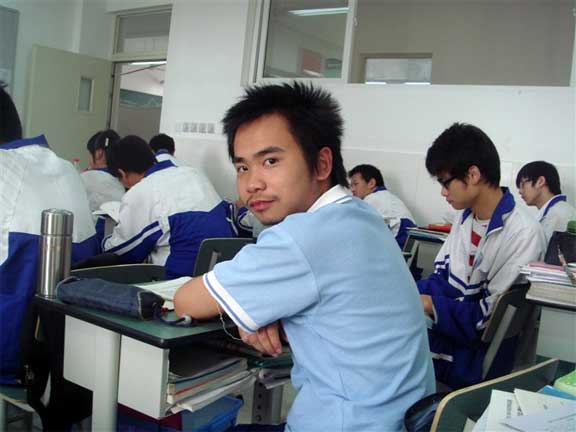
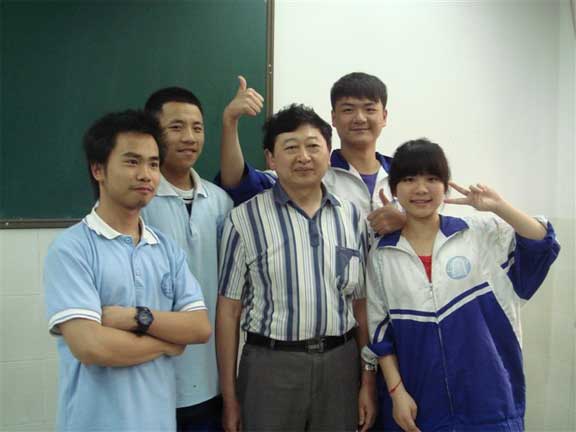
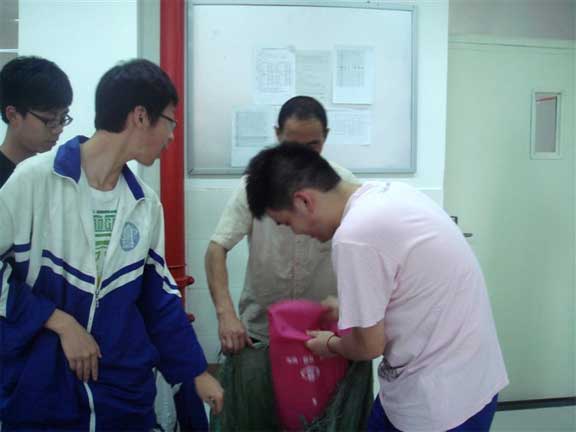
This post is part of a series on making the transition from high school student to college and adulthood in China. Maomao is a recent high school graduate and new contributor to Chengdu Living who’ll be attending the University of Science & Technology, a prestigous college in Chengdu, this fall. We’re looking forward to getting more of an inside look into what life is like for a young adult in China.
Is there anything you want to know about the Gaokao?
I found this on Facebook! Very cool. I’ve heard about the Gaokao before and came across an article recently which raises a question in my head, which is..
Do Chinese students really see the Gaokao as life or death? Apparently the top performers in the Gaokao haven’t gone on to outstanding careers, according to recent studies. It’s much the same in the US with the SAT exam which is closely tied to college entrance. It turns out that students who perform very well on the SAT don’t necessarily go on to successful careers. Check out this link from last month: http://blogs.wsj.com/chinarealtime/2010/06/30/gaokao-no-predictor-of-success/
Yes,the one perform well in Gaokao don’t necessarily go on to successful careers
But they do go to a good university
The Grad school I attend actually has a program that brings students from China to our school to get their teaching degrees or an ESL degree and a girl in my “Teaching All Learners” class told us about her experiences with the Gaokao. I felt so bad for her though because she was saying that due to the fact that she didn’t do well on this exam, she couldn’t become a nurse, which is what she’d always wanted to do, so she had to “settle” for being a teacher and coming to America. She also had a really hard time (though was very open minded) understanding why we bother teaching students with special needs in our general ed. classrooms. It was very foreign to her. I did my best to understand her point of view and to absorb some of her experiences through the broken English conversations we attempted. Another reason I felt so bad for her was that the majority of the class (including the teacher) acted “disgusted” with her explanation of how things are done in China (in their educational system)…like their way is so much better or something. It royally pissed me off that they were so pompous! Every system is different and no way is “right”. It’s too difficult for some people to wrap their heads around that though. Sorry for the rant. The article you wrote was really good and I enjoyed learning more about the exam!
When someone from a rich family fall in the exam,he or she would be sent abroad.
This makes a lot of sense – I think many overseas universities that accept Chinese students are in it for the profit. If you’re a Chinese student attending a high profile school like Berkeley or Yale I assume you’d need obvious proof that you have extraordinary ability, but there are a lot of no-name universities in the US that accept Chinese students who pay enough cash.
I have a Tibetan friend who recently went to Los Angeles to study, but it was at some small college that I had never heard of. I checked out their website and it prominently features information (in Chinese) on how Chinese students can apply to the school from overseas. It definitely comes off as a service pandering to ultra-wealthy overseas Chinese who want to send their children abroad and are willing to pay whatever the price is. Not a bad business model provided you can fulfill all of the visa requirements!
Great info though Maomao, thanks for contributing!
Maybe no way is “right”, but the Chinese education system is most certainly wrong.
most of us know it was wrong,but we still work hard for it.It’s the only way to get into a good university
It’s very hard to say it’s wrong, because i always believe there’s no other option infront, there are over 50-60 thousands students to take gao kao each year in chengdu, it’s really hard to distribute educational opportunities fairly~ it’s sad to say so through
Hey, I was wondering what a good score in the gaokao would be, for example a 7 out of 10 ? My university asked for a 7 out of 10 for our Dutch final exams, but thats quite hard ! For chinese students they only ask a score of 500 which I think is not so much…
Well it’s out of 750. My dad got a fairly high score back in the early eighties (it was the low 700s high 600s), now he’s making 6 figures in the US.
btw, without noticing I see this website is based on Chengdu and everything that concerns it ! I’ m actually half ‘Chengdu-nese!’ Its great to see such a website. Im born and raised in the Netherlands but Chengdu is like my 2nd hometown, Almost every year I spent at least 2 months in Chengdu ! I even speak fluent chengdu dialect. Funny to see this article on such a website ! I see you are attending 理工大学, thats great ! I’ll be studying for one year at 西南财大 to improve my reading and writing skills in Chinese !
I am going to uestc(电子科大Not理工大学)I got 544 of 750.this grade could not make me go to西南财大
If u ask me to express my opinions on gaokao, i can just publish a book of 1000 pages.
as a highschooler who is studying right now in a traditional chinese high school (but fortunately don’t have to worry about the gaokao cuz i’m leaving for canada for my tertiary education) and also has been to ohio for my sophomore year as an exchange student. i totally know the “gigantic” differences between the lives of american students preparing for SAT (yes,i have taken it too and honestly the grade is relatively good even while i don’t speak english as my first language) and the chinese gaokao.
honestly, i don’t even know how to begin. but if abstracting all the “what is like” into a single sentence, i would address gaokao as “a total inevitable nightmare of hell for all the chinese teens.” lol
no exaggeration.
gaokao is what all you life is about if ur a highschooler in china (well, at least for the majority of the students who actually care about their futures).
i’m lucky enough that even my family is not that wealthy, but they can support me to go to toronto for the college in 2012 ( the tuitions in canadian universities are much more affortable). But most of my friends aren’t. So basically we haven’t hung out since forever just because they are not willing to waste 2 hours of their previous time on the movie. And they never text since the senior year, cuz cells are some distractions. They get up at 6:30 am and go to bed at 2:00 am next day ,everyday.Of course not all the students behave like this, but most do. My friends go to private schools or the top public schools so they have to “torture” themselves in this way, inevitably, just to attend the universities that are decent for them. Because “better universities equal brighter futures, and conversely ….” However Lucky enough, “the hell of 3 years” has only 40 days left for them.
Well there is no doubt you can write a book of gk for 1000 pages and your replies are aweresome.
you are a lucky guy that can go abrod for your tertiary education which only few could have.There is some of my friends go to France Italy or some other contries when they finished their gk.And they said they also had a hard time when they studing the course in a forgin country.
As ‘our gaokao’ passed a year.we often get together and talk about ‘the summer of that year’ and we dont think its so hard as we used to be but think its a happy time.But conversly we think university is a much more harder time.
‘There is millions sb think they will set free these days’ is a popular sentence in our circles(who had finished gaokao) the ‘millions sb’ include some of my friends who choose to have Gaokao again this year.but we dont told them so cuz its not good for their perseverence.And I also advise you dont show your friends you are very relax cuz you dont worried about gaokao,they will feel unbanlenced when they are work hard and you are not.
totally agree 🙂 maomao
American students (or just Americans)have no idea what it is like to prepare for the gaokao.
it does not just take 3 years to prepare. i takes approximately 12 years ever since the first day in school. Parents bust their asses to send their kids to the best elementary schools , middle schools ,high schools, and then indirectly push their kids into the best universities they can get by being the “evil” monitors. it’s not an exaggeration seriously. You may think that it is ridiculous, and yes so do the students, but for them they have no other options but facing it (even for the relatively more affluent families, most of them believe it’s best to attend the best chinese universities rather than the foreign ones)
I’ve experienced the life being an american highschooler. Even though i had known some fractions from the hollywood movies like notorious movie Mean Girls or school tv series like that, i was still in shock about how relaxing schools can be for them when i first got there in ohio. I suck at math here in china, but people literally called me genius in US. I didn’t work hard like i used to do in china, actually nothing near “hard” at all,but i was still at the top there. i’m not saying that i’m a nerd ,smart or anything, i’m just saying that the mount of the effort students take on their grades are totally different between US and China. Not to mention that getting an A or even B is way harder in china considering everyone works hard for them.
the school life like Americans’–going to school at 7:30, going home at 3 pm, optional courses, different clubs, nominal homeworks(compared with chinese ones), free time to hang out, easy A, parties– is nothing but a dream for the chinese students.
yes Chinese education system was wrong and most Chinese parents was wrong.dure to my obveration,students who was send to the best elementary schools , middle schools ,high schools could not get a good grades in the end but conversely those who do not study so hard in childhood but work hard with some stratage in high school could go to a better university.
I could say that student who work hard in childhood had alread ‘dead’ before they grow up,they become dull nagetive selfish and too sensitive of falier.So they can never do better in the future.many nerd ‘dead’ like this
it is true that China’s foundamental education give students a good basic in math.So many people said that Chinese have some advantage in logical things
What university will you be attending? My dad has gone to both York and Guelph after getting his bachelors at Remin.
I had attended uestc for a year,renmin university is a very good university which require very high scores
However, because all their attentions are focused on the gaokao. Bullying is much less common here in chinese high schools,according to my own experiences in a chinese public school and a private school.
In american high schools, in my opinion, the people at the top of the high school hierarchy system are usually jocks like quarterbacks and the cheerleaders. Nerds, geeks, outed gays are traditionally at the bottom. In stark contrast, however, The nerds with the best grades are usually at the top here in china, if there are any hierarchy thing at all, because the grades is the key how this chinese society value a student nowadays. The socalled misfits are considered to be the ones who are most likely to fail the gaokao, but the ones who are socially isolate. There’s basically no serious socially life which american teenagers care about all the time due to the fact that gaokao takes it all.
Bullying is much less common? perhaps less bullying on physics but bullying often happened on oral.when someone made a mistake when answering,everyone laughed at him or her.And who fall in exam also would be laughed at.Its ture we gain entertanment in things like laugh at sb or play tricks in class.teachers and students are used to it so we dont care that.and now these entertanment had became an unforgetble rememberance.
have you heard the book called The Battle Rymes of the Tiger Mother by Amy Chua?
Read it. Even their family is in US and never have to worry about the Gaokao in china, but the ways (which Americans think are inhumane) how amy chua “trains” the kids are commonly typical in a traditional chinese family, just for the gaokao.
Dang, i really wrote something. I was planning to watch a movie before seeing this article about gaokao lol. Crap
and i’ve noticed there are a bunch of grammer errors. Excuse me.
I’m learning English…….forgive me
corrections ×not the ones who are socially isolated. There’s basically no serious social life for chinese highschoolers which american teenagers worry about all the time (like their social status on facebook ) due to the fact that gaokao takes it all.×
What school did you have to go to? Or are you referencing all of this from Mean Girls? Most of the kids here are somewhat more concerned about their grades now. But I go to a “white kid” school in the suburbs.
Where do you live?
what is “Or are you referencing all of this from Mean Girls?”
means?
The thing you described is usually found in Hollywood movies such as Mean Girls. In my school there is no “heirarchy” of highschool students.
Maomao is currently at Sichuan Tech University (四川科技大学) and doesn’t have internet access there! He contacted me and said that he’ll respond to the recent comments on here when he can.
UESTC is university of electrionic science and technology of China(电子科大)
I go to this university is like so much fun! I study is like 25 hours a day, is like so much. I have no girlfriend and I not have any friends
I LOVE THIS TEST ITS SO MUCH FUN I LIKE.